
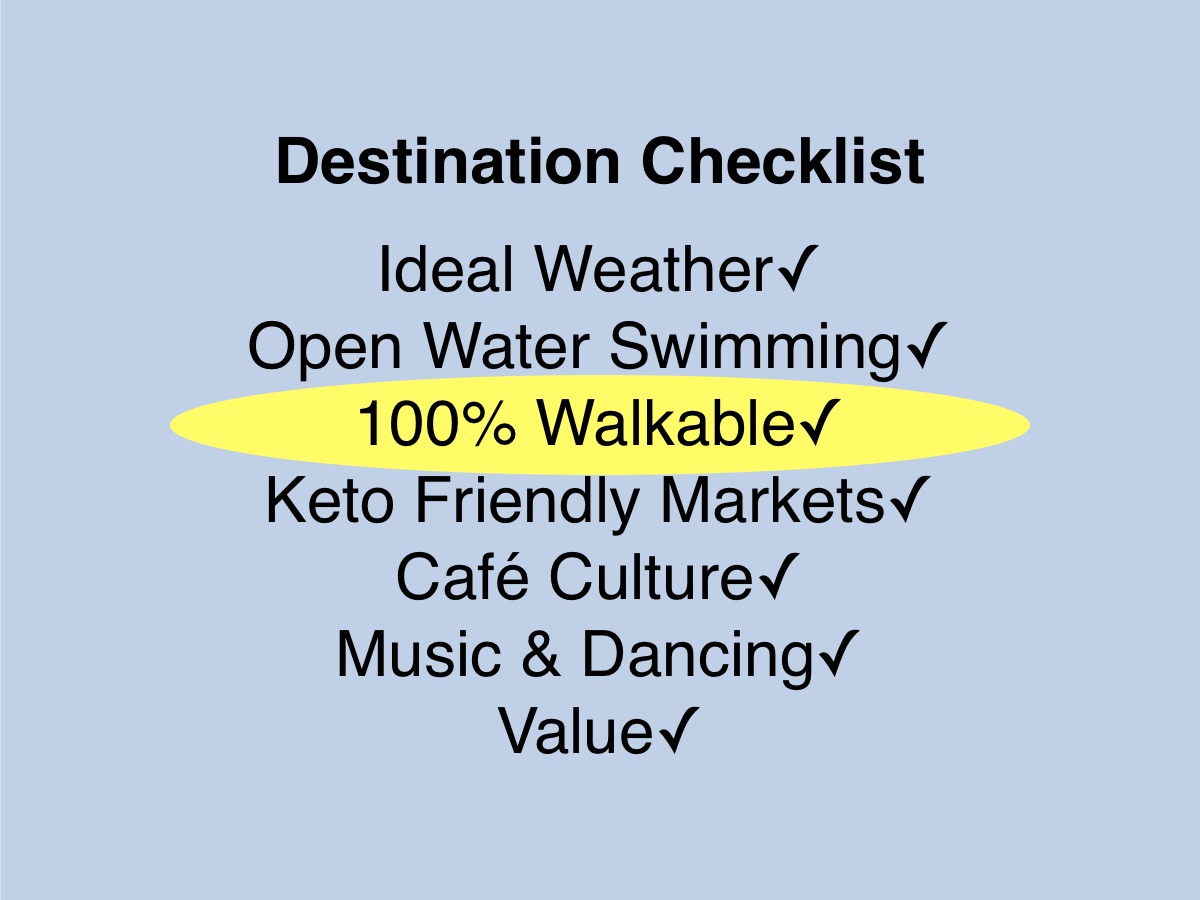
This post is about choosing 100% Walkable slow travel destinations.
100% Walkable is one of seven categories on my Destination Checklist.
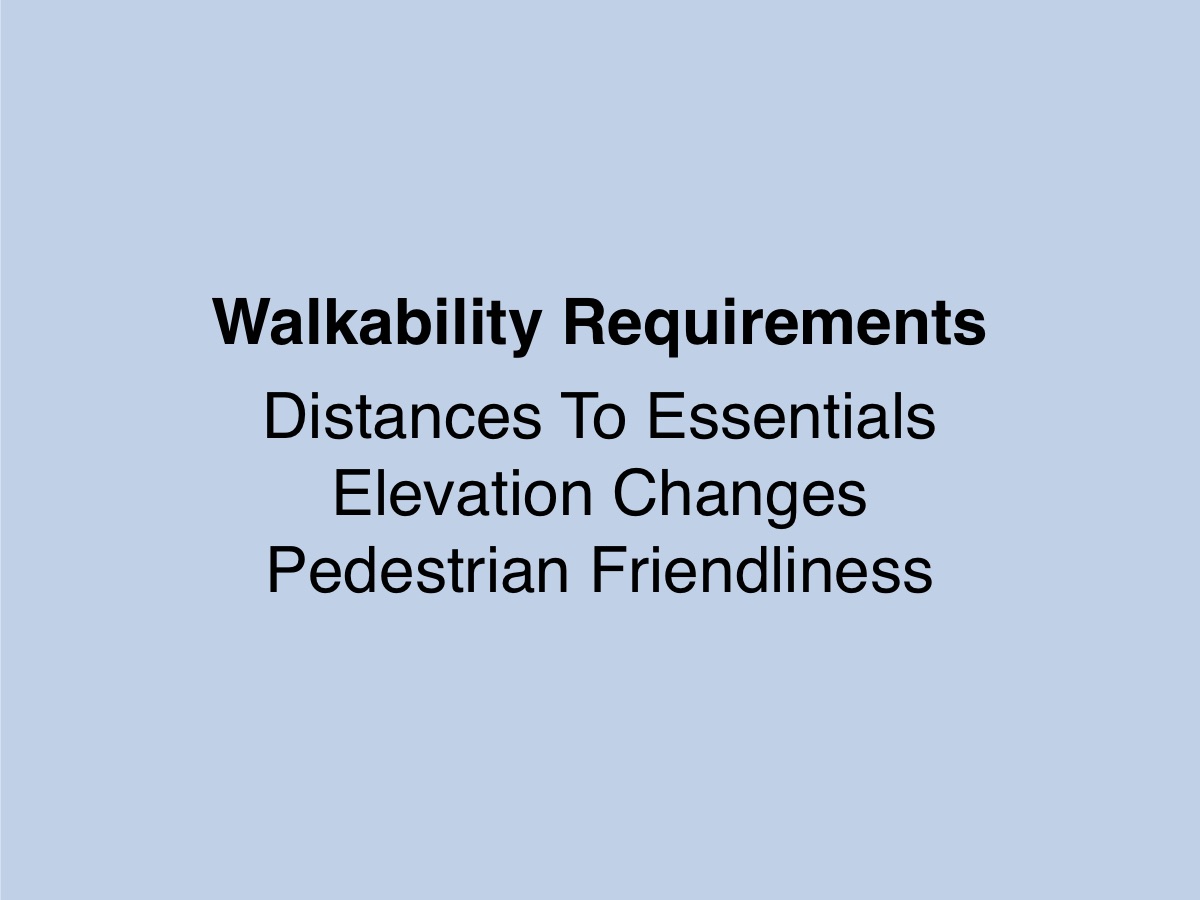
100% Walkability Requirements
- Distances To Essentials
- Elevation Changes
- Pedestrian Friendliness
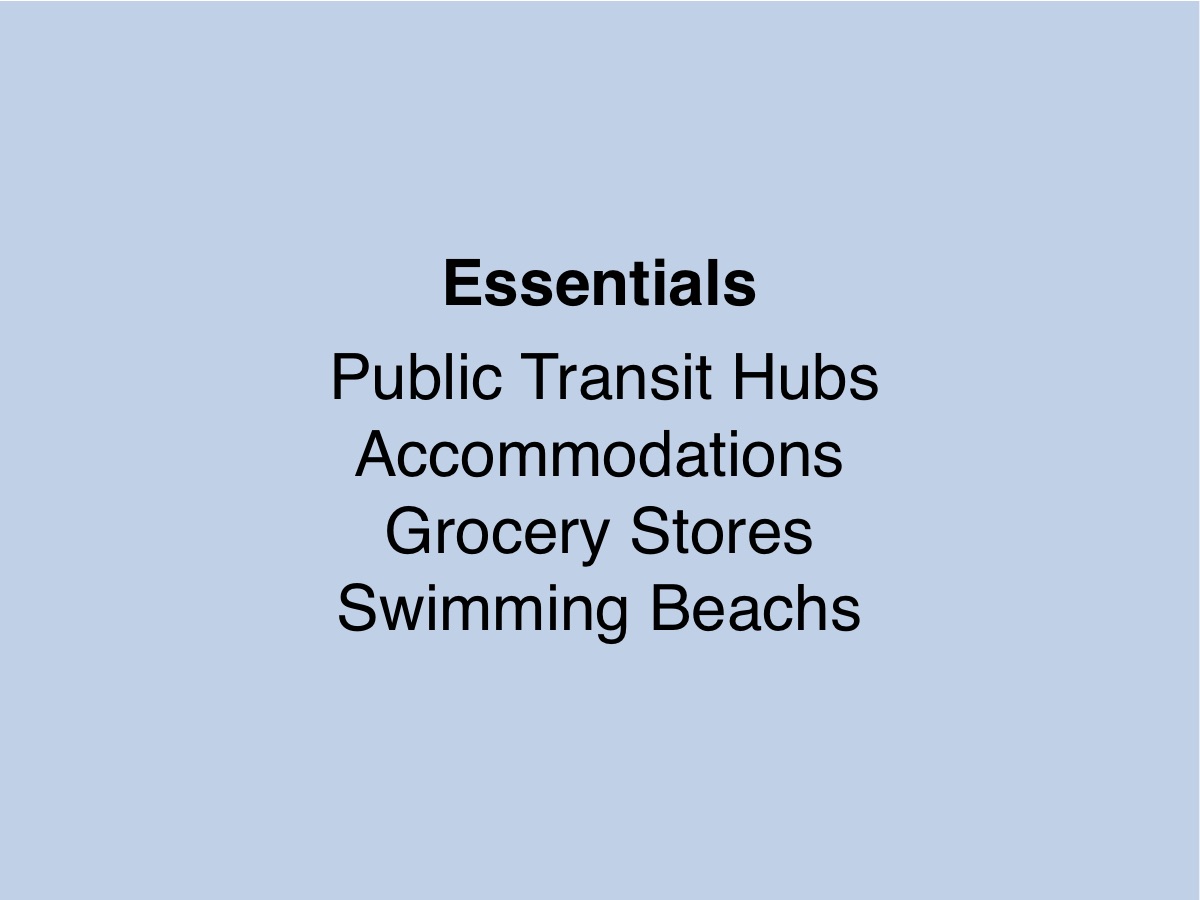
Essentials must be within walking distance of each other.
- Public Transit Hubs
- Accommodations
- Grocery Stores
- Swimming Beaches
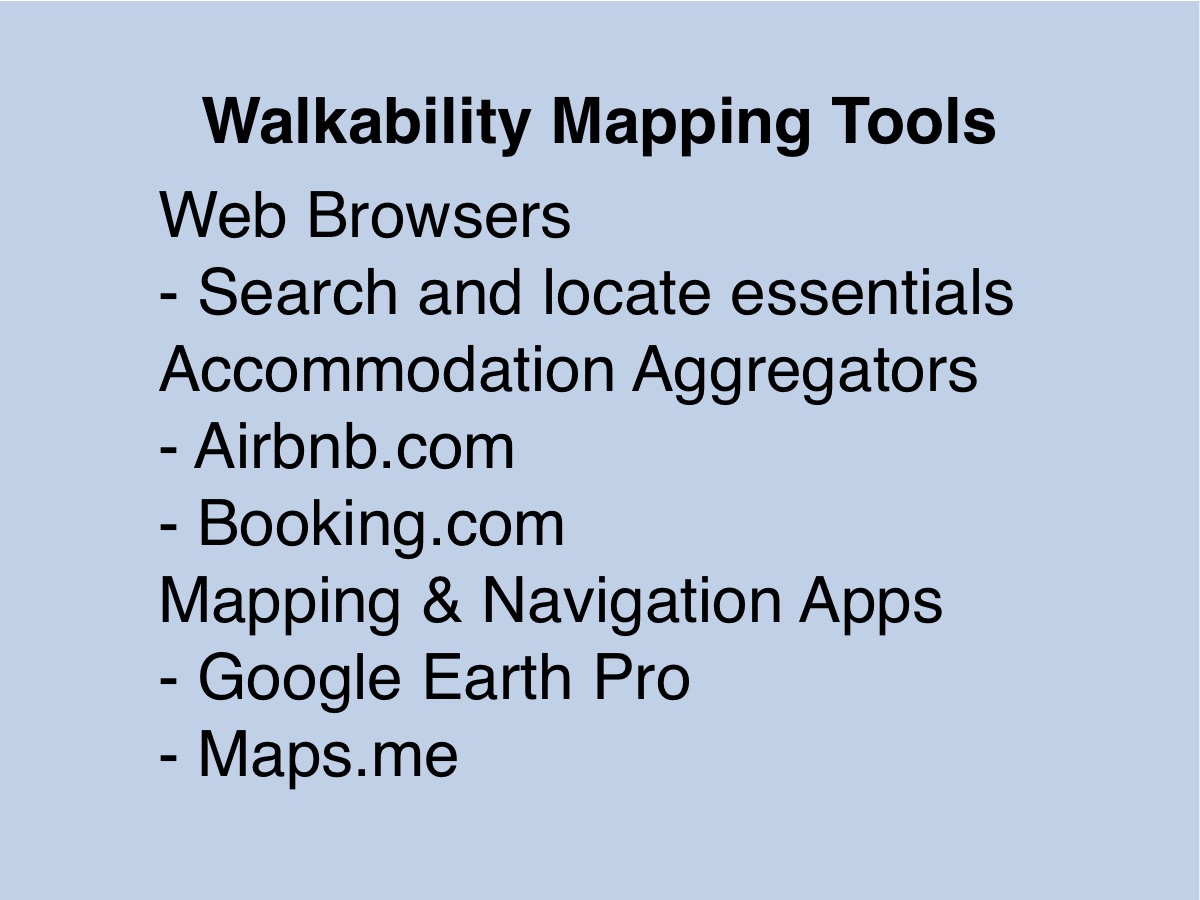
Mapping Tools are used to locate Essentials.
- Web Browsers
- Search and locate essentials
- Accommodation Aggregators
- Airbnb.com
- Booking.com
- Mapping & Navigation Apps
- Google Earth Pro
- Maps.me
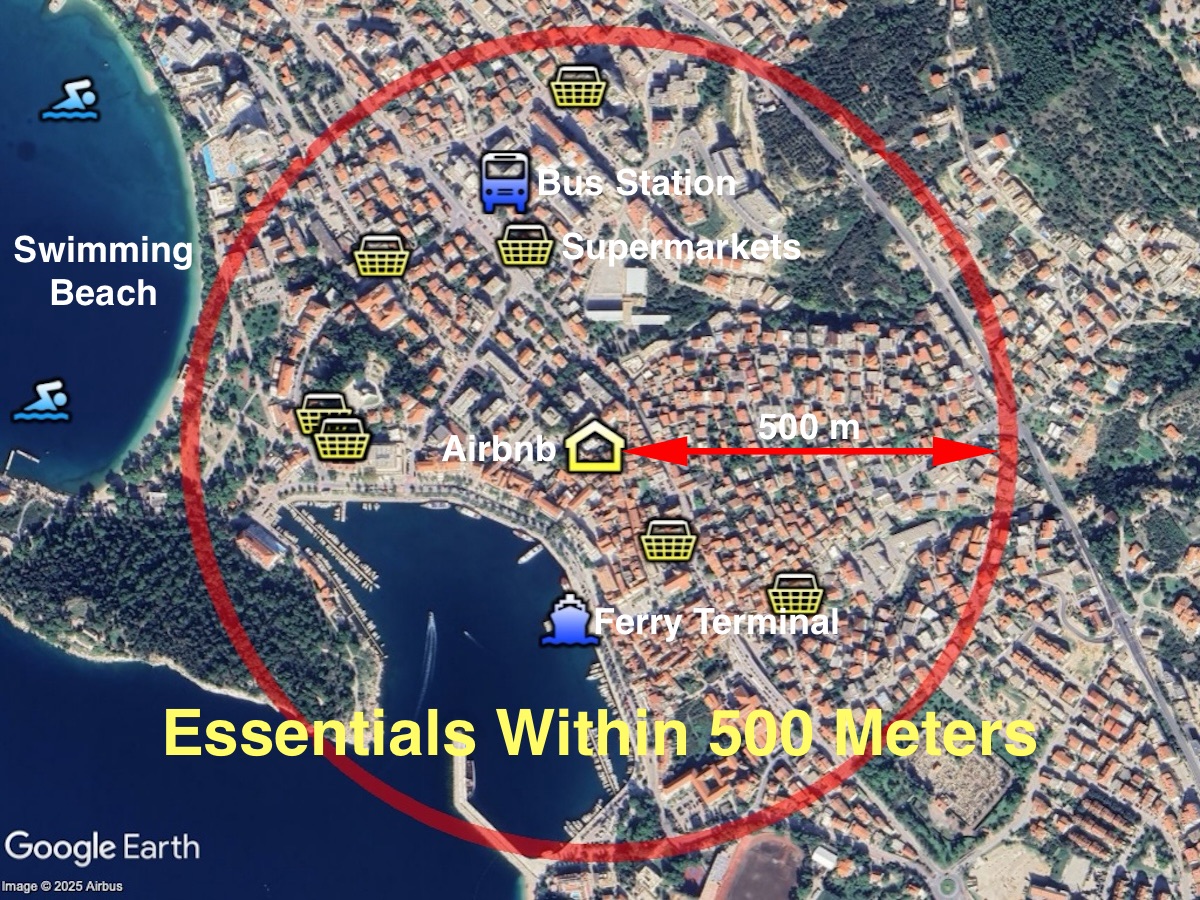
Google Earth Pro screenshot showing Essentials within 500 meters (0.3 miles) of an accommodation in Makarska, Croatia.
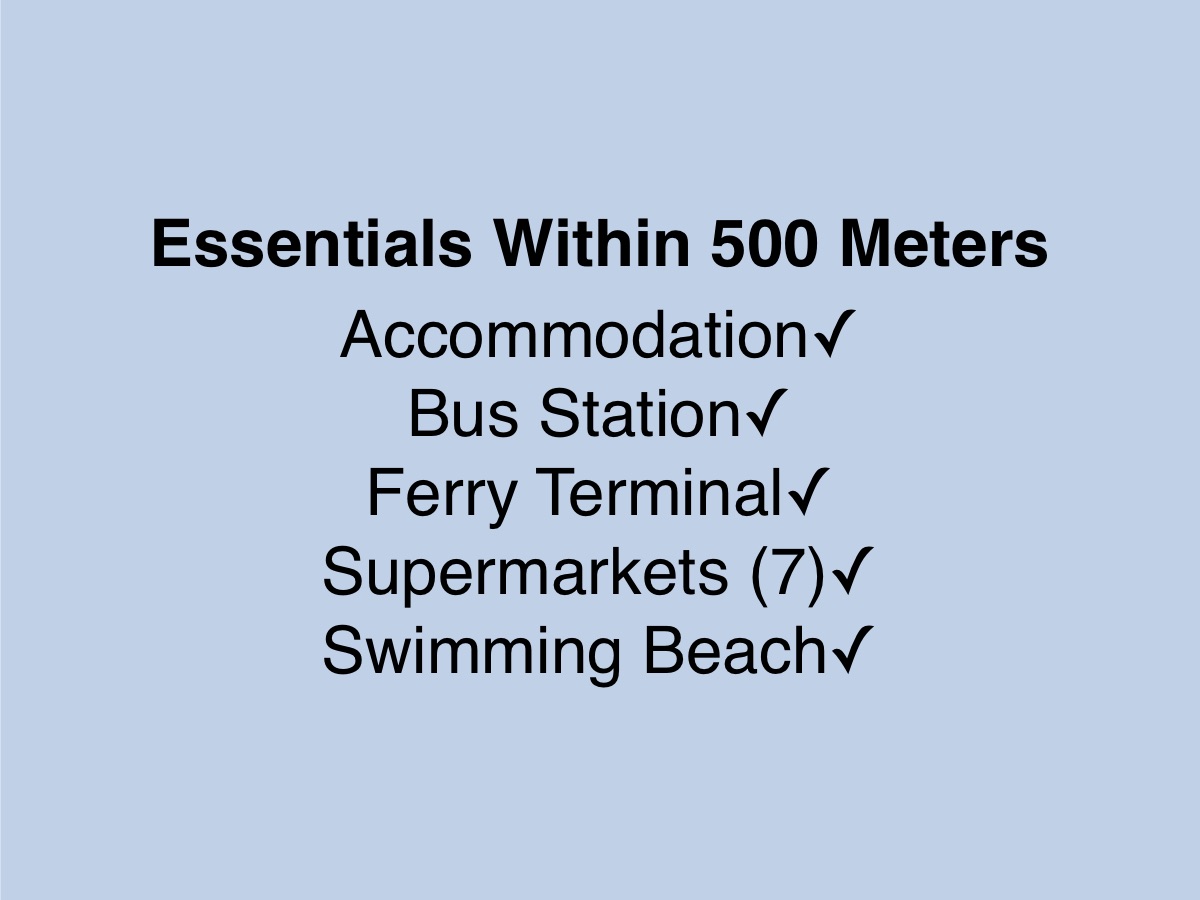
Essentials within 500 meters (0.3 miles) of an accommodation in Makarska, Croatia.
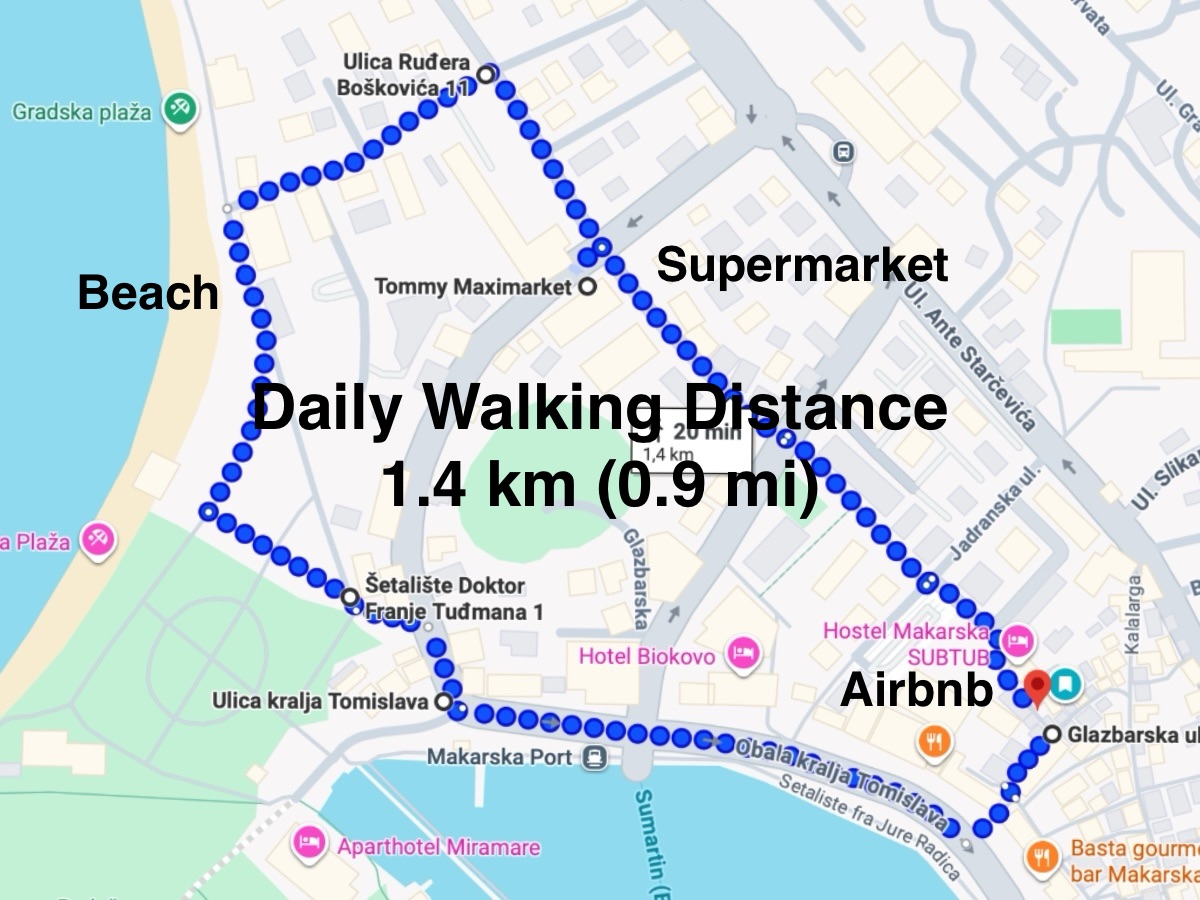
A typical day’s walk to the beach for a swim followed by grocery shopping on the way home. The total walking distance is 1.4 km (0.9 mi).
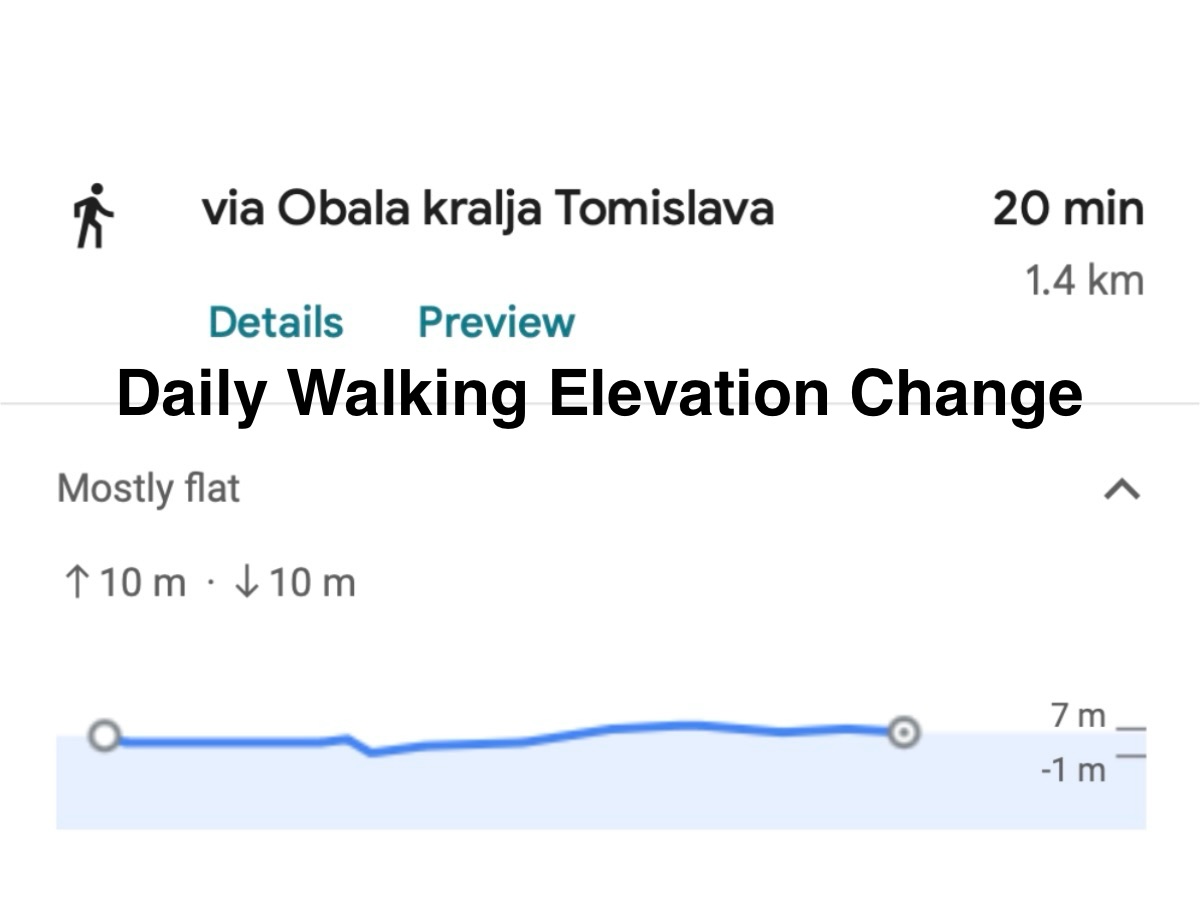
Over mostly flat ground.
Pedestrian Friendliness is not as easy to research as locating essentials on Google Maps.
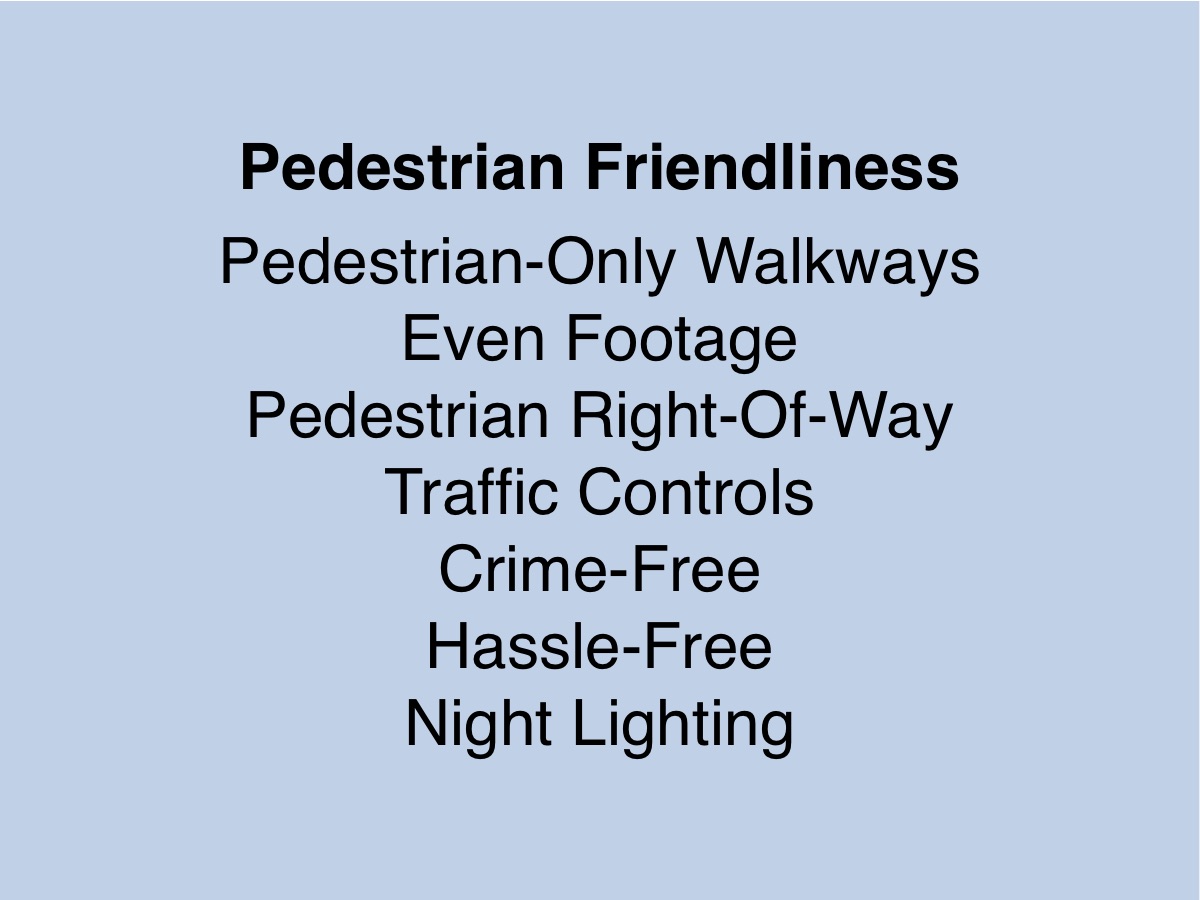
Pedestrian Friendliness
- Pedestrian-Only Walkways
- Even Footage
- Pedestrian Right-Of-Way
- Traffic Controls
- Crime-Free
- Hassle-Free
- Night Lighting.
Pedestrian Friendliness is rare in much of our auto-centric world. In the United States it is a luxury found only in a few affluent locations like Miami’s South Beach and Honolulu’s Ala Moana neighborhood. The same is true for parts of other highly developed countries including Canada, Australia and New Zealand.
Developing countries often have worse Pedestrian Friendliness than the highly developed countries mention above. Developing countries prioritize motor vehicle infrastructure over potable tap water, sewage treatment and pollution control. Sidewalks are not even on their radars. Large western-style shopping malls don’t count as pedestrian friendly. They may have miles of perfectly walkable interior corridors but outside is a different story.
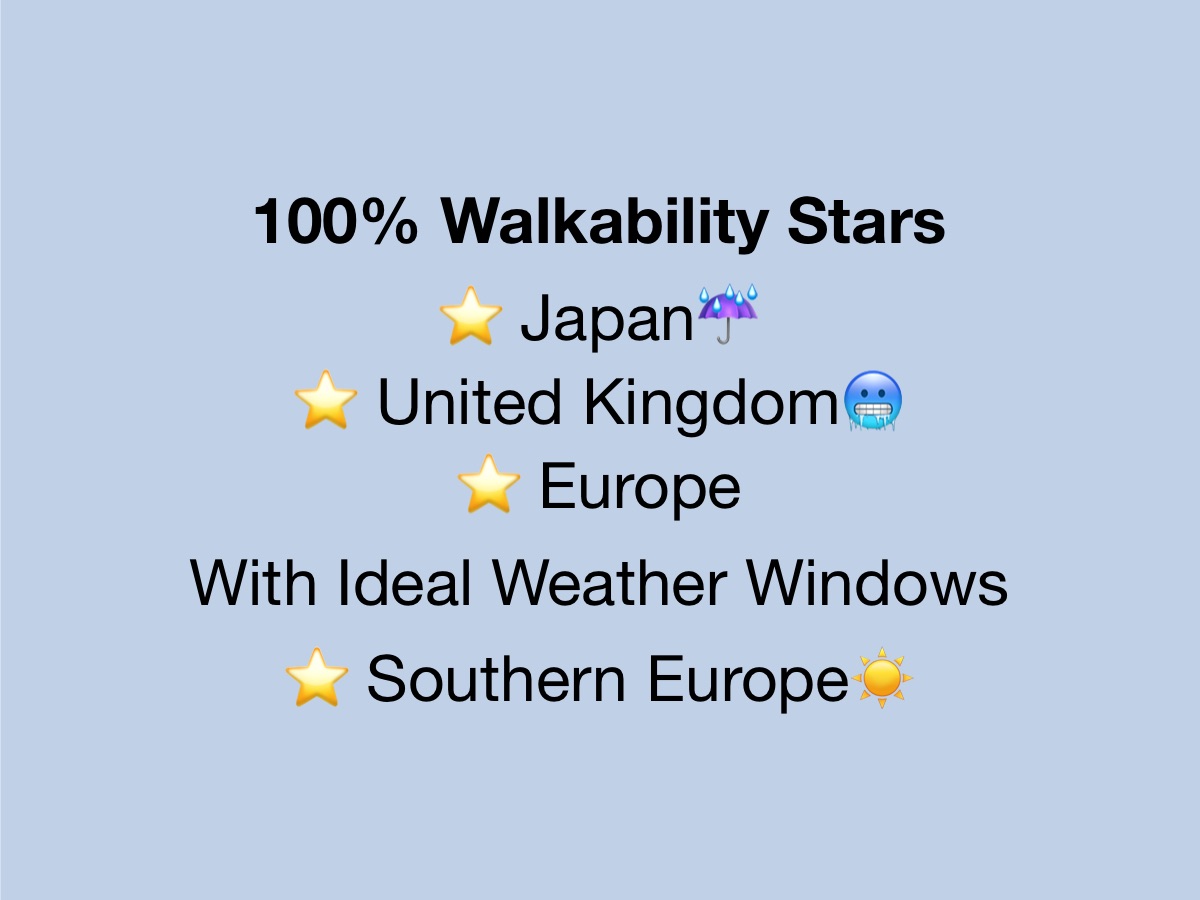
Pedestrian Friendliness often goes hand in hand with good public transportation infrastructure. The real stars of both are Japan, United Kingdom and Europe. The only caveats are elevation changes in hilly cities like Lisbon and smooth surfaces everywhere that can be slippery when wet. Both are ruled out by two other categories on my Destination Checklist. Ideal Weather excludes rain and Open Water Swimming is done from flat shorlines. Beach towns in Japan, United Kingdom and Europe are safe bets for 100% Walkability but only Southern Europe has Ideal Weather windows June through October.
What about Walkability at other times and places? It takes research, a bit of guesswork and boots-on-the-ground exploring.
A big problem in researching Walkability is wading through massive amounts of questionable travel information. The few good sources of information about Walkability are drowned in a sea of questionable information.

Questionable Walkability Information
- Questionable Sources
- YouTube Travel Vlogs
- Travel Websites and Blogs
- Social Media
- Questionable Information
- Often misleading and inaccurate
- Sales pitches and product promotions
- Monetized clickbait “travel porn”
You have to read between the lines and look between the frames.
Pedestrian Friendliness is NOT indicated by video clips of walking in streets with motor traffic, driving around on motor scooters, riding in tuk tuks, mall walking and motor traffic that does not stop for pedestrians. Pedestrian Friendlies is NOT indicated by warnings about pick pockets, aggressive street people and horror stories of sever injuries from falls caused by poor footage.
I tolerate places with questionable Walkability for short sight seeing and exploratory excursions but not for slow travel destinations. For example, a month spent in Rio de Janeiro for Carnaval was a profound positive life altering experience for me. However, crime and aggressive street people diminish Rio’s Walkability score to zero and rule it out as a slow travel destination. Rio’s crowded, dangerous and polluted beaches don’t help.
Other boots-on-the-ground exploring have yielded different outcomes for finding 100% Walkable slow travel destinations. Tamarindo and Sámara looked like two promising beach towns in Costa Rica. I explored each for a month. For me, Tamarindo is a barely walkable spring-breaker hell scape. On the other hand, Sámara is a very walkable and pleasant slow travel destination during Costa Rica’s dry season. Other boots-on-the-ground Walkability experiences, good and bad, are detailed in other posts.
Choosing 100% Walkable destinations is a vital part of a slow-travel lifestyle that works well for me in my late seventies. I am confident it will continue working well into the future.
In other posts, I present in-depth explanations of the other six categories on my destination checklist.
Please submit questions, comments and suggestions about slow travel and nomad living beyond 70.



Leave a Reply