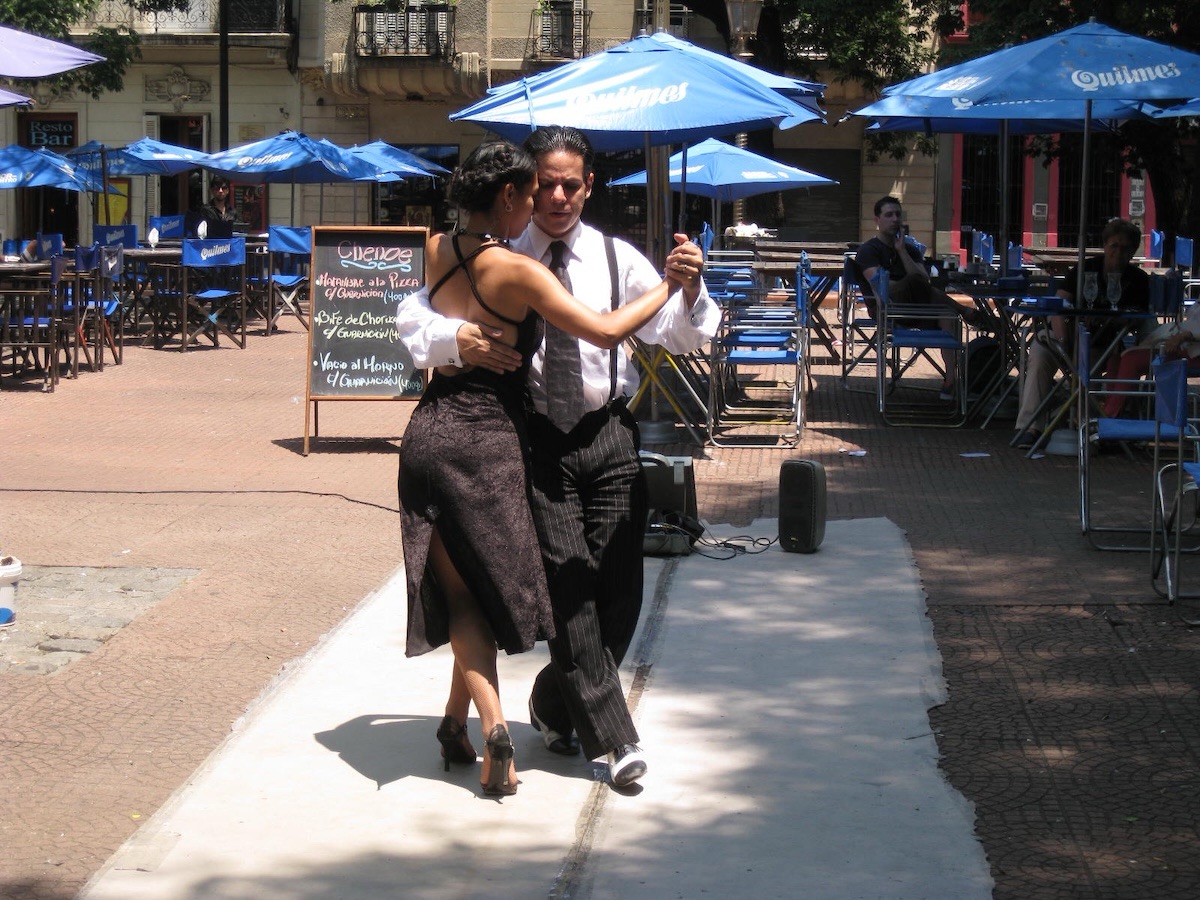
I know about but not how to dance. These are impressions of an unskilled amateur dancer.
As discussed in a previous post, the most basic dance skills required to physically express music are: identifying the pulse, finding the “one”, counting the beat and performing rhythmic body movements coordinated with the beat. Specific neural-muscular pathways are required that are different from most common activities. My biggest obstacle was the lack of these neural-motor skills necessary for dancing. This was clearly illustrated to me when a dance instructor asked me to listen to and vocally count simple dance music. My musicality was sufficiently developed at that time to accurately count the music with my voice. The instructor then asked to simultaneously tap my finger to the count without looking at my hand. I was then asked to look at my finger tapping while still counting out loud. There was absolutely no correlation between my verbal counting and my finger tapping. It was evident that I could correctly hear and verbally count simple dance music but the neural pathway from my ears to my finger was not adequately developed. The same result occurred when I was asked to tap my foot in time with the music. How could I expect to physically express music with my whole body (aka dance) if I could not perform the simple and most basic activity of tapping my finger or foot to the music’s pulse? The answer is training.
All dancers use training exercises to develop and improve neural pathways that connect their body movements to the music. It is difficult for novice dancers to learn these techniques on their own. They are often taught them by dance instructors. To succeed, instructors need special teaching skills that, unfortunately, many do not have. The instructor’s bodies “speak the language” of dance but they are unable to communicate to novice dancers whose bodies “speak other languages.” Some “body language”crossover exists between dance and activities like gymnastics but little with every day activities like office work or driving a car. Dance movements are completely alien to many novice dancers like me. On the other hand, dance teachers often grew up with music, dancing or dance-related activities. It is their native body language. It is “in their blood.” They often feel naturally gifted and are arrogant and condescending to novice dancers like me. Having these teachers say “just listen to and move to the beat” meant nothing to me. I had to rely on other training techniques to develop neural-muscular pathways connecting my body to dance music.
Musicians and dancers use all sorts of visual and auditory techniques to help them internalize musical structure. Pianists use metronomes to learn to play sheet music on time, ballerinas practice to taps of the master’s stick and conductors coordinate orchestral elements with their wands. My technique is to use computer apps like Audacity.app to simultaneously watch visual wave forms of the music while listening and moving my body to it.
Watching wave forms to connect to music begins with visually identifying and vocally counting the primary pulses of the shortest repeating musical pattern. These pulses will always fall into repetitious patterns of either a single sound (single-count) or dissimilar sounds in multiples of two (two-count, “1 2”, “1 2 3 4”, etc) or three (three-count, ”1 2 3”, “1 2 3 4 5 6”, etc) The next step is to coordinate body movements to the vocal counting. The goal is internalize the basic musical structure into neural-muscular pathways (aka “muscle memory”) so that the body can eventually make specific movements exactly timed to the pulses without relying on external cues or counting.
The most important fundamental body movement to the pulse are foot steps appropriate to the type of dance. Start with simple two- and three-count dancing with steps on every pulse. Good examples are merengue and waltz to, respectively, simple two- and three-count music. More advanced dancers will count and step to the pulses of longer and more complex “phrases” constructed repeating two- or three-count pieces. They may count, step and make other body movements not only on the major pulses but also on places in the music appropriate to the dance style, rhythm and individual expression of the music.
An example a more advanced dance style is salsa “danced on the one.” The shortest repeating pattern is eight pulses. The leader’s basic pattern begins by stepping with the left foot on “1”, right foot on “2”, left foot on “3”, no step on “4”, right foot on “5”, left foot on “6”, right foot on “7”, no step on “8” and repeat. Beginner dancers may start by counting every pulse as “1”, “2”, “3”, “hold”, “5”, “6”, “7”, “hold” until they can confidentially step and hold with the correct foot on the correct pulse. The count can gradually be simplified to counting just the stepping pulses “1”, “2”, “3”, “5”, “6”, “7” or “quick”, “quick”, “slow.” The count may be further simplified to the “1” and “5”, just the “1” or no counting at all. The important thing to remember is every level of dancer consciously or unconsciously counts the music. Every level of dancer sometimes gets “lost” in the music and has to feel and count the pulses and find the “one” to get back “on” the music.

Leave a Reply