
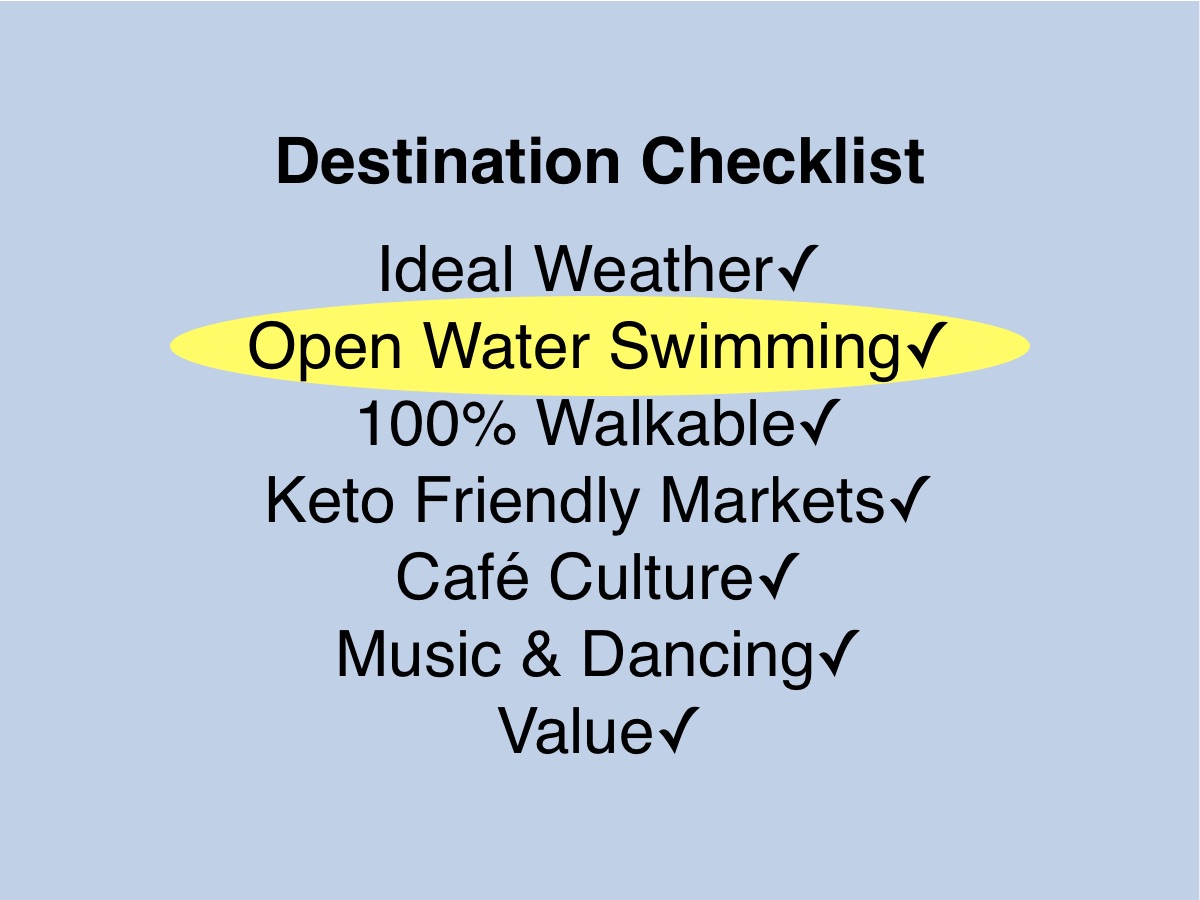
This post is about choosing slow travel destinations with good Open Water Swimming.
Open Water Swimming is the most restrictive category on my Destination Checklist.
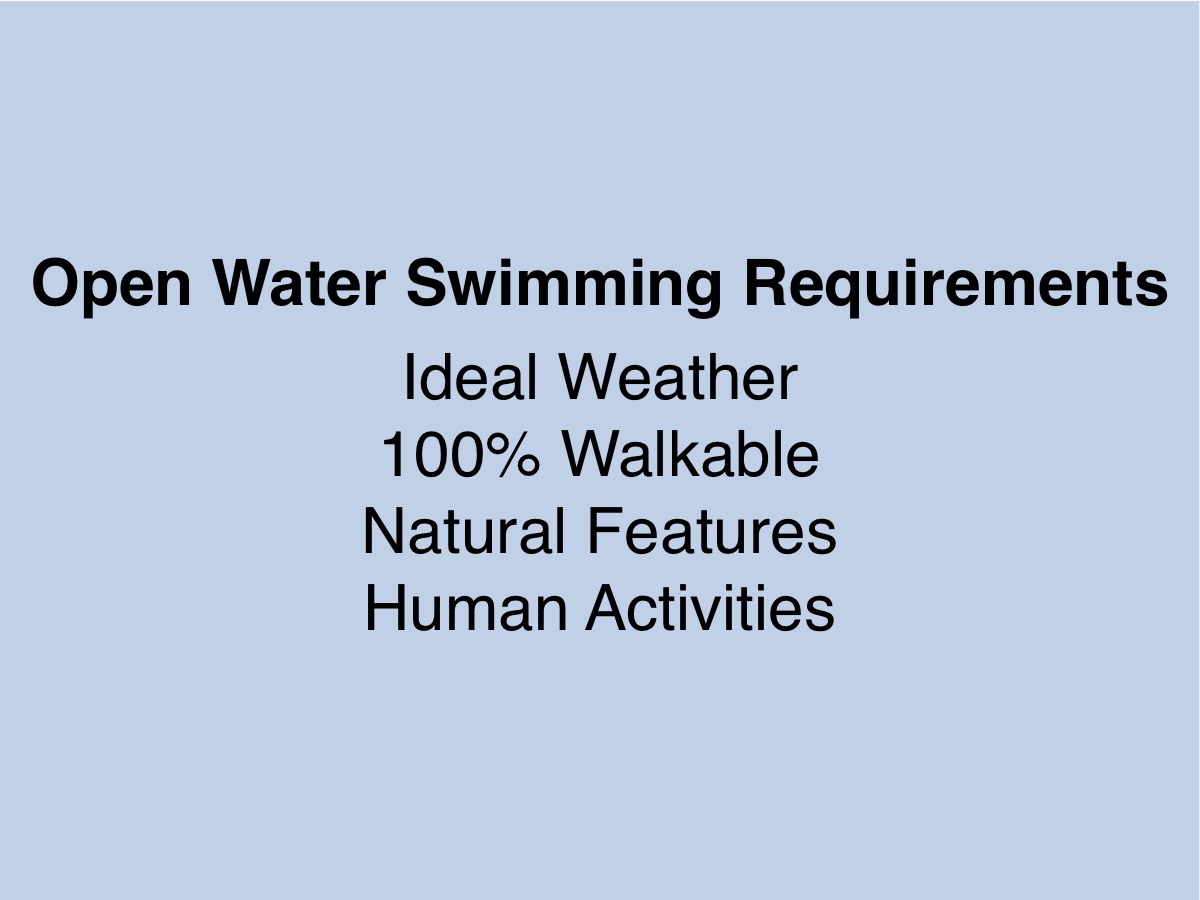
Open Water Swimming Requirements
- Ideal Weather
- 100% Walkable
- Natural Features
- Human Activities
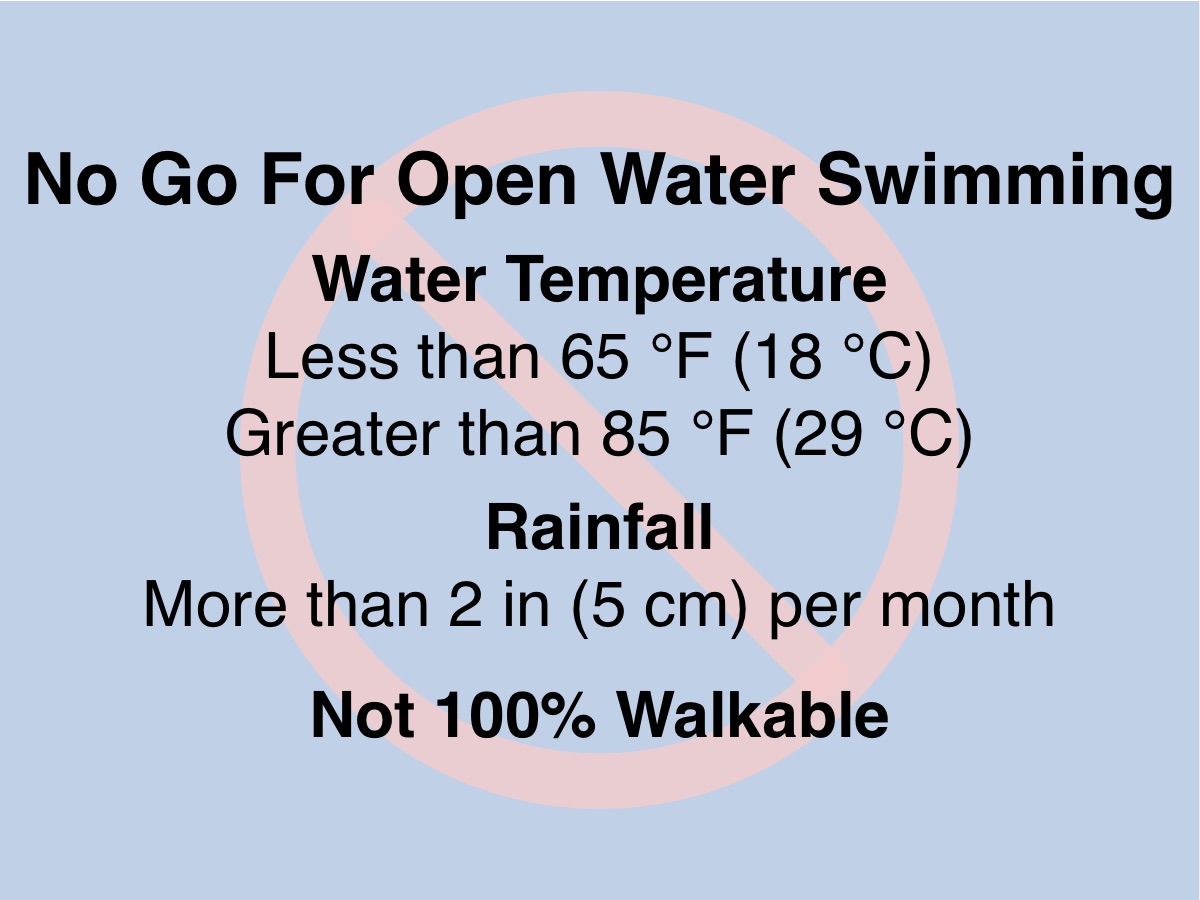
No Go For Open Water Swimming
- Not Ideal Weather
- Water Temperature
- Less than 65 °F (18 °C)
- Greater than 85 °F (29 °C)
- Rainfall
- More than 2 in (5 cm) per month
- Water Temperature
- Not 100% Walkable
Water Temperature limits are my comfort zone for swimming. Water Temperature, Rainfall and 100% Walkable are easily to research (see Ideal Weather and 100% Walkable posts).
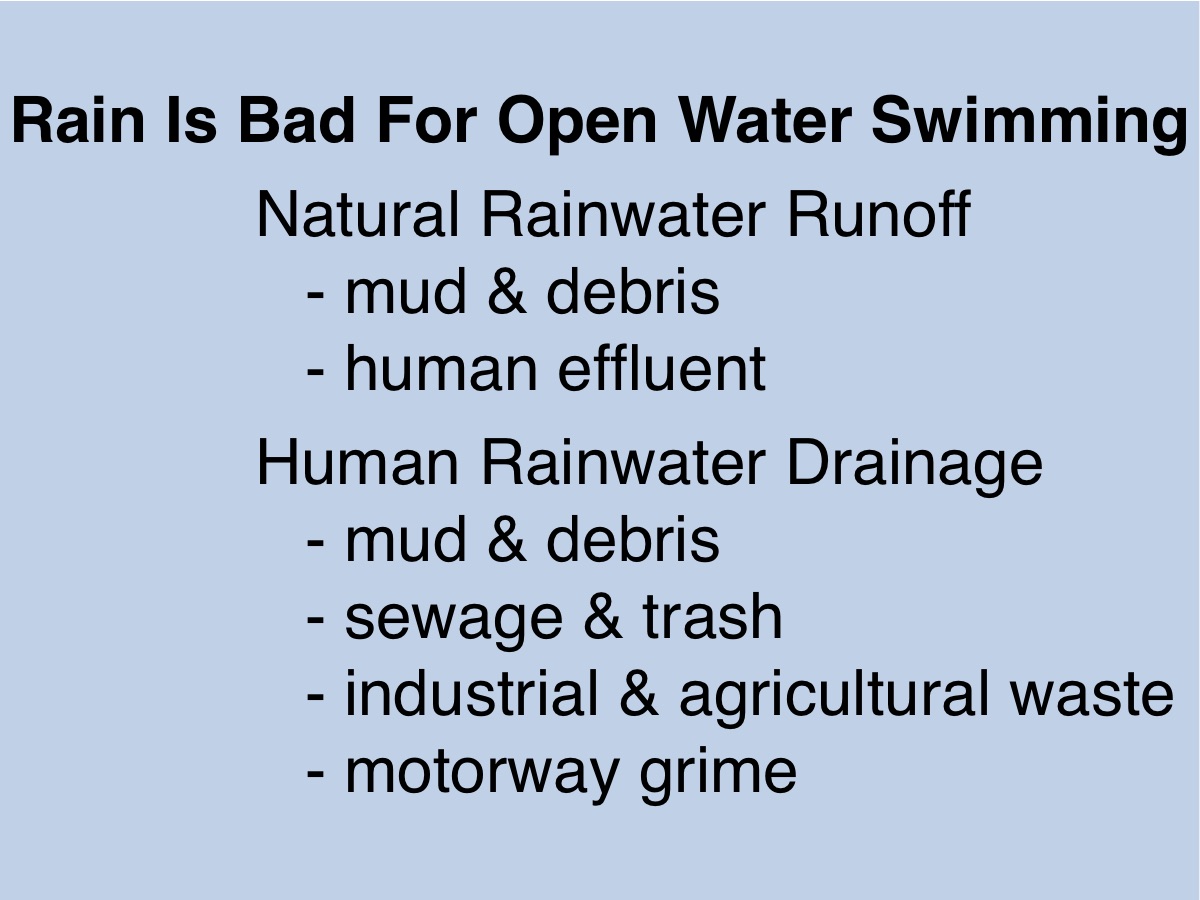
Rain Is Bad For Open Water Swimming
- Natural Rainwater Runoff
- mud & debris
- human effluent
- Human Rainwater Drainage
- mud & debris
- sewage & trash
- industrial & agricultural waste
- motorway grime
Low rainfall is an absolute requirement for slow travel not because swimming in the rain is necessarily unpleasant or dangerous per se. It is because rainwater runoff from the land flushes natural mud and debris along with raw sewage, trash, motorway grime, industrial and agricultural waste directly into swimming areas. This is especially true in developing countries that have inadequate infrastructures for sewage treatment, trash removal, storm sewers and drainage to handle runoff from the land. Rainwater runoff is a routine and ignored fact of life in developing countries.
Some of the world’s finest swimming beaches found in highly developed countries also have problems related to rainfall. For example, Honolulu’s beaches are closed to the public during rare periods of extreme rainfall that overwhelm waste treatment and drainage infrastructure. It is not worth the risk to ever slow travel anywhere during rainy seasons.
Excessive Rainfall is easily to lookup and avoid (see Ideal Weather post).
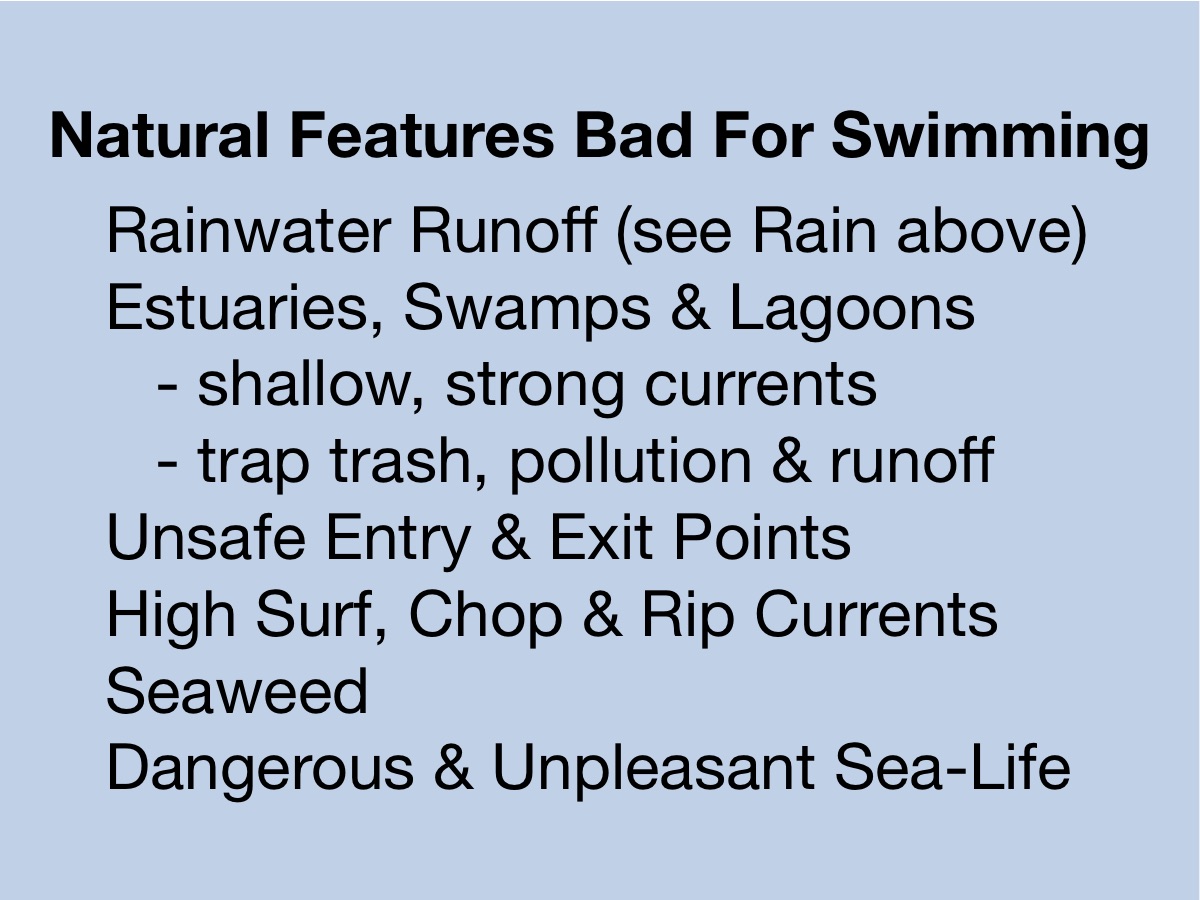
Natural Features Bad For Swimming
- Rainwater Runoff (see Rain above)
- Estuaries, Swamps & Lagoons
- shallow, strong currents
- trap trash, pollution & runoff
- Unsafe Entry & Exit Points
- High Surf, Chop & Rip Currents
- Seaweed
- Dangerous & Unpleasant Sea-Life
Determining Natural Features and Human Activities bad for Open Water Swimming is more difficult than looking up Ideal Weather conditions and determining 100% Walkability.
Natural rainwater runoff is an obvious and easily problem to avoid. Reasons may not be as obvious for avoiding other natural features. An example is Mauritius’ well known Flic ’en Flac beach. The beach looks great but the designated swimming area is a narrow shallow channel along the shore of the lagoon behind a barrier reef. Signs forbidding swimming outside the designated zone are enforced by coast guard patrol boats. There are strong currents over sharp coral and sea urchin spines outside of the zone. Flic ‘en Flac is not good for Open Water Swimming and is therefore not a place I would slow travel to.
In other posts I discuss potential slow travel destinations with natural features that are either good or bad for Open Water Swimming.
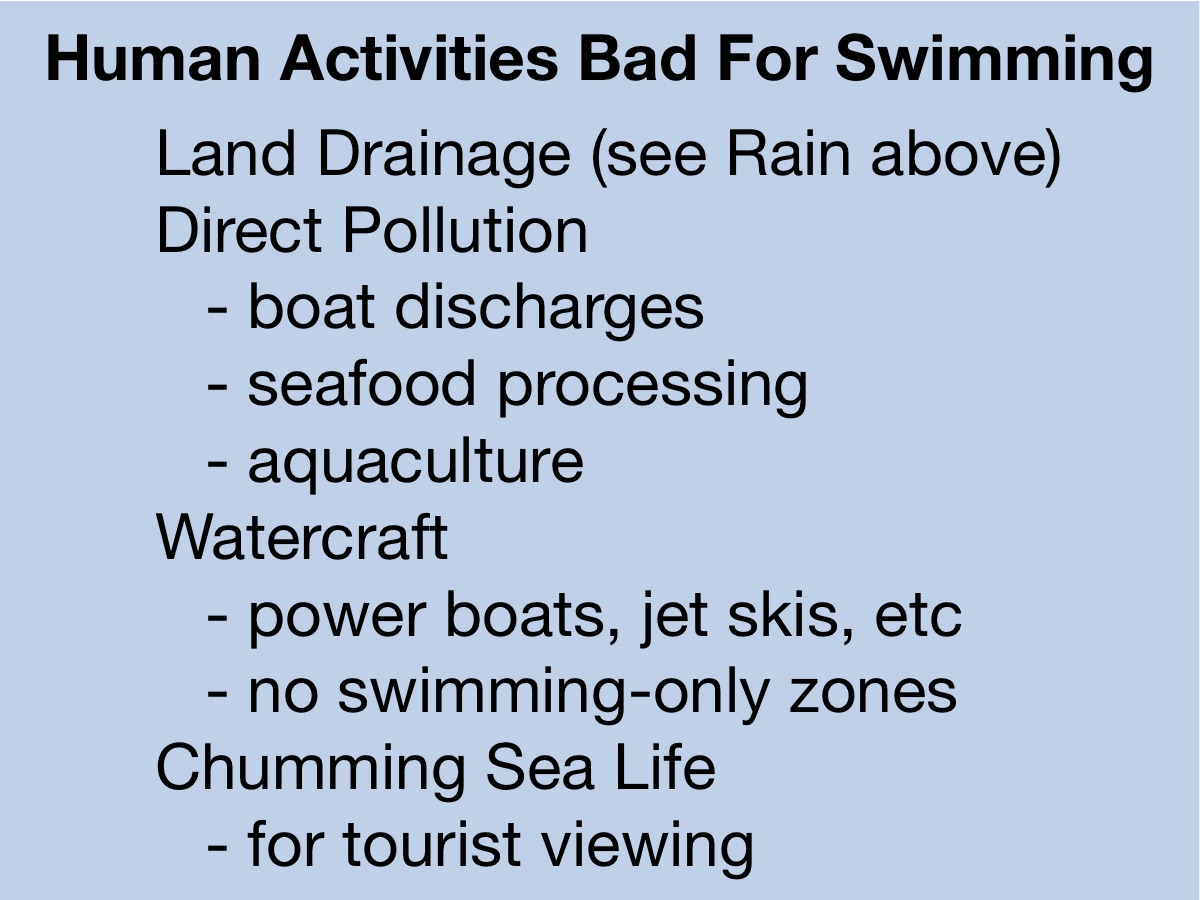
Human Activities Bad For Swimming
- Land Drainage (see Rain above)
- Direct Pollution
- boat discharges
- seafood processing
- aquaculture
- Watercraft
- power boats, jet skis, sailboards, etc
- no swimming-only zones
- Chumming Sea Life
- attracts sea life for tourist viewing
Land drainage is an obvious and easy problem to avoid. Reasons may not be as obvious for avoiding other human activities. For example, local tour guides often chum patches of water with food that attracts sea-life for tourists to view. It seems relatively harmless at first glance but it can exacerbate a natural problem. Chummed sea-life associate humans with food and approach swimmers looking for a free lunch. Observing sea-life while swimming can be a positive experience when the animals are going about their natural business. It becomes unpleasant and dangerous when they see humans as a source of food and aggressively pursue, interfere with and bite swimmers.
Please see other posts where I discuss potential slow travel destinations with human activities that are either good or bad for Open Water Swimming.
After looking up weather and walkability, choosing slow travel destinations with good Open Water Swimming is mostly a process of eliminating places with bad natural features and/or human activities. It takes research, a bit of guesswork and boots-on-the-ground exploring.
A big problem in researching Open Water Swimming locations is wading through massive amounts of questionable travel information.
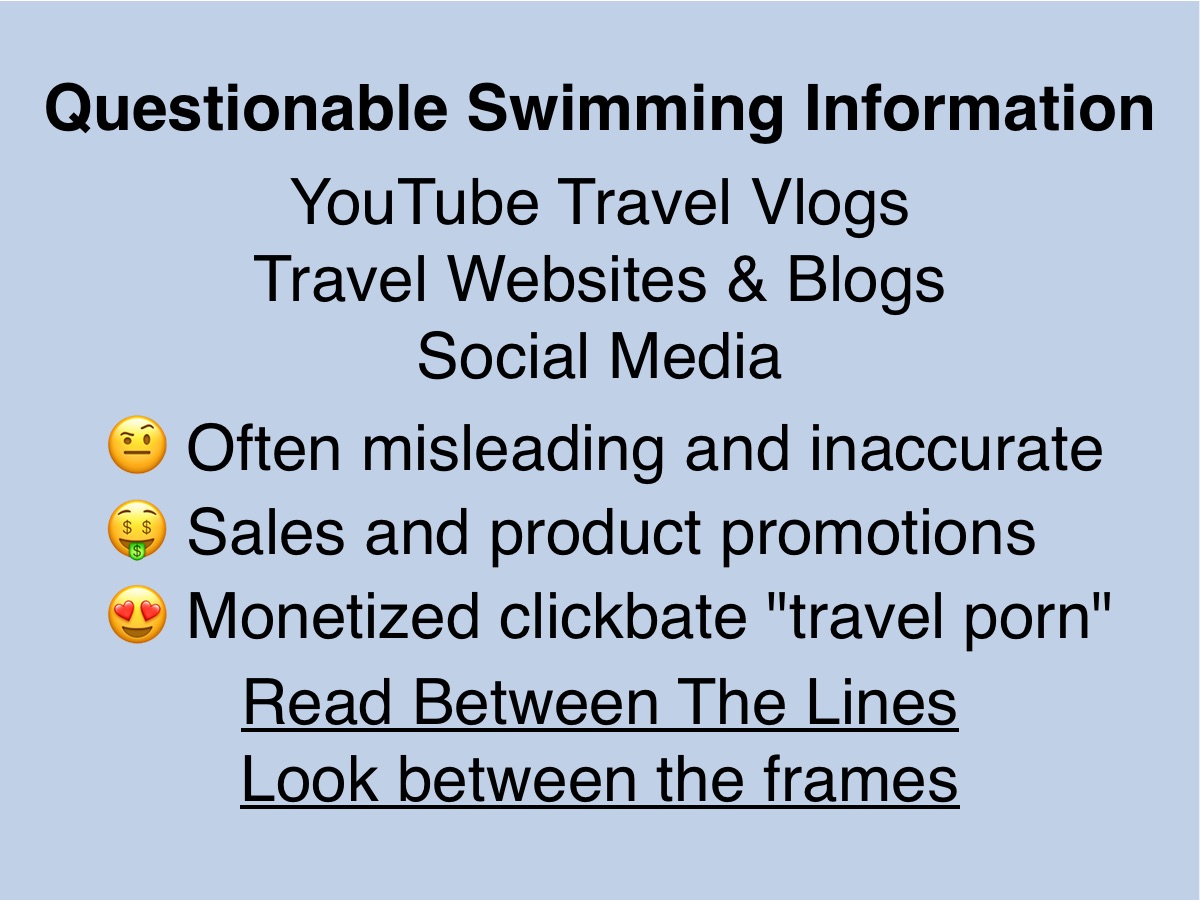
Questionable Swimming Information
- YouTube Travel Vlogs
- Travel Websites & Blogs
- Social Media
- Misleading and inaccurate information
- Sales pitches and product promotions
- Monetized clickbait “travel porn”
Always read between the lines and look between the frames of travel information. Open water swimmability is NOT necessarily indicated by video clips of beautiful beaches. For example, Bali’s famous and photogenic Sanur Beach borders an unswimmably-shallow lagoon behind a barrier reef that fills with muddy polluted runoff every time it rains. It is unsuitable for Open Water Swimming and therefore not a destination I am likely to slow travel to again..
I tolerate places with questionable open water swimming for short sight seeing and exploratory excursions but not for slow travel destinations. For example, time spent on the Ganges River was a profound positive life altering experience for me. However, I did not jump in with the Hindu pilgrimages and go for a swim with cremated human remains. Other boots-on-the-ground Open Water Swimming experiences, good and bad, are detailed in other posts.
Open Water Swimming is a vital part of a slow travel lifestyle that works well for me in my late seventies. I am confident it will continue working well into the future.
In other posts, I present in-depth explanations of the other six categories on my destination checklist.
Please submit questions, comments and suggestions about slow travel and nomad living beyond 70.


Leave a Reply